2020 was not the year for everyone and we can all agree Covid-19 was to blame. With strict lockdown restrictions lasting for months on end, it had us all uneasy and impacted many psychologically.
As a group of four, we wanted to create a platform where women could easily access simple self-care practices on the go and act as a connection hub for them to talk and share resources on self-care with other users.
Before going into the design stage, we needed to first understand how people were coping during the pandemic, what self-care meant to them and how often they practiced it.
We used two types of data collection methods: online surveys and interviews. We interviewed eight individuals and received a total of 41 responses from the survey from which we were able to generate key metrics and insights in our demographic and their feelings towards self-care and social media.
These were the set of questions that we had prepared:
When analyzing the data we collected, some common themes that we found were:
Along with interviews and surveys, we also looked into literature reviews and Australian Bureau of Statistics data to get a more in-depth understanding of the negative impacts Covid-19 has caused for people in Australia.
Based on our research we found that:
Using the research that we gathered, I created a persona that reflects the target users' struggles ábout maintaining a healthy lifestyle in the face of the pandemic.
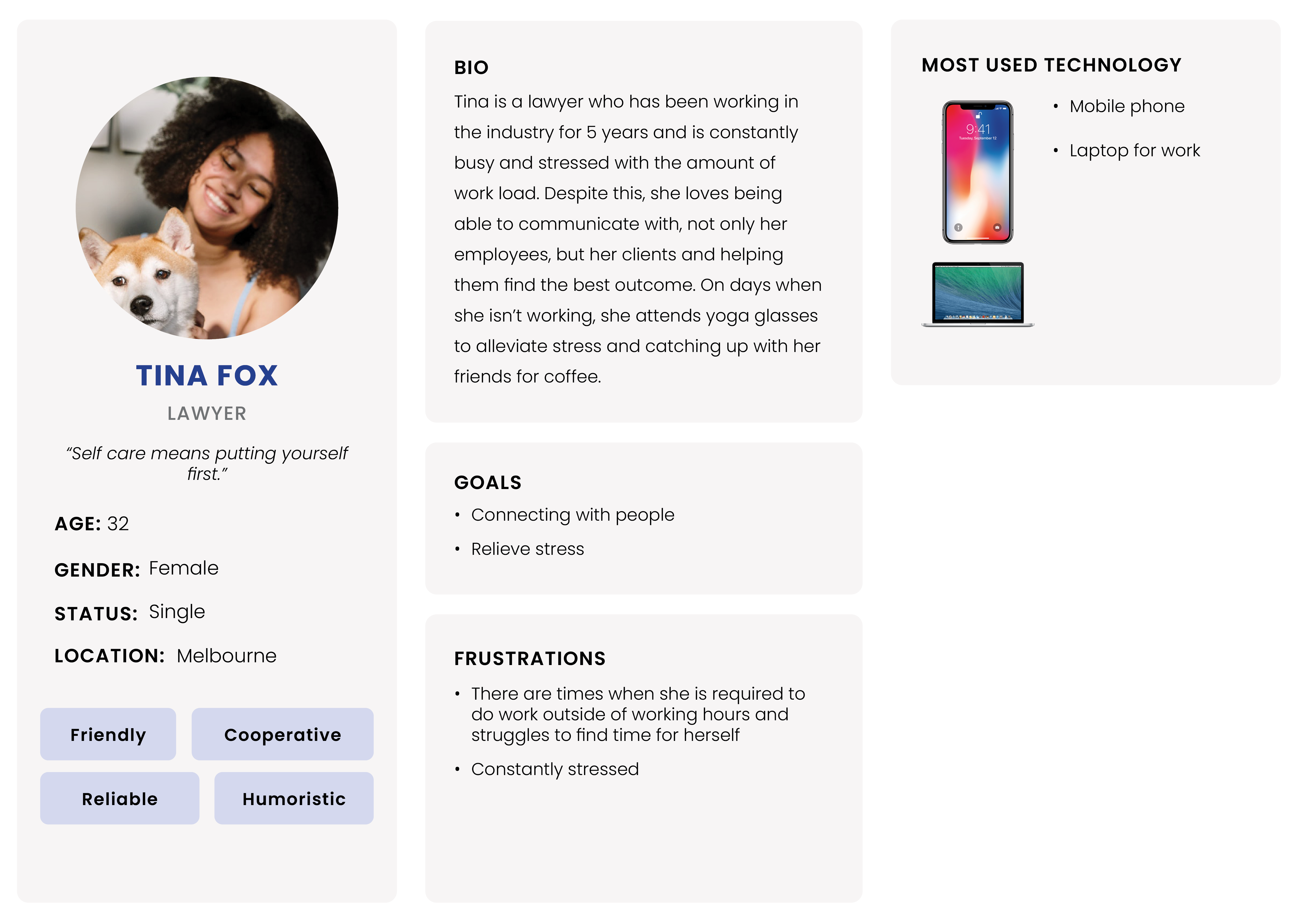

Tina is having a hard time balancing her work life and mental wellbeing after the COVID-19 restrictions and is more stressed than ever as her yoga classes have been cancelled, which was her only option of managing stress.
Because Tina is unable to attend her weekly sessions, she finds herself communicating with her friends through social media and often ranting to them about her day as a coping mechanism. After a few days of ranting, Tina realizes the way she copes with her stress is unhealthy and asks her friends for recommendations on exercise apps or yoga videos. One of her friends, Lisa, recommends her a self-care app that would be beneficial for Tina as it offers yoga videos from professional instructors, but tips on dealing with stress.
Listening to her friend, she installs the app on her phone and tries a few of the yoga sessions that are available. After trying them out for herself, she realizes how beneficial yoga was for her mental health (Singh & Chaurasia 2020, p. 91) and is amazed that she can do it inside her own home. She hits the notification button on her favorite instructors and is excited for the upcoming lessons.
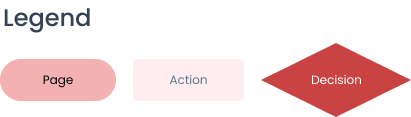
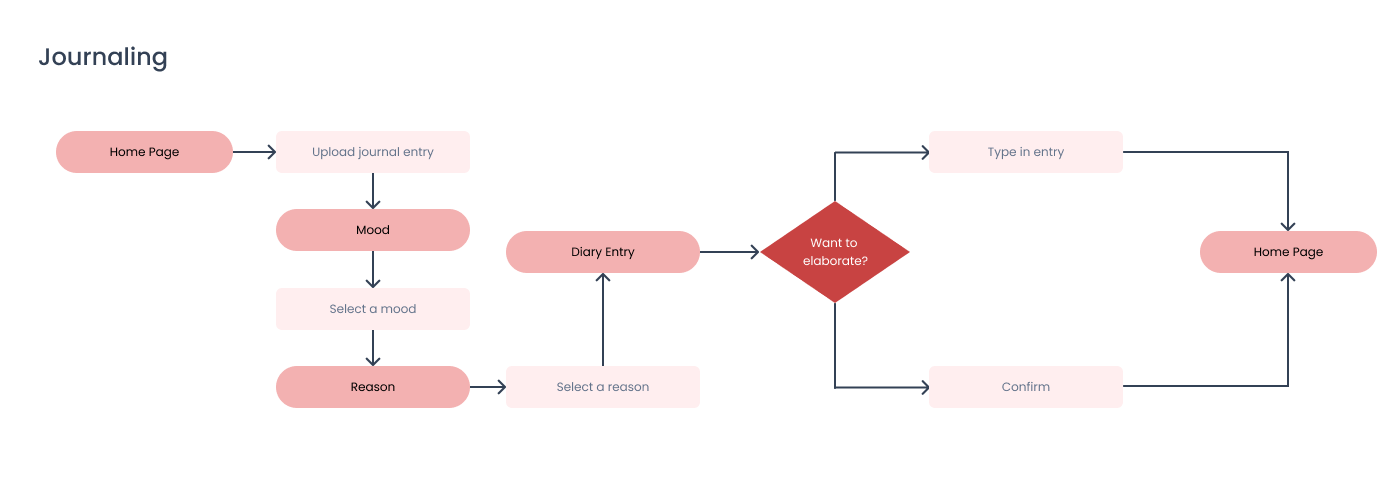
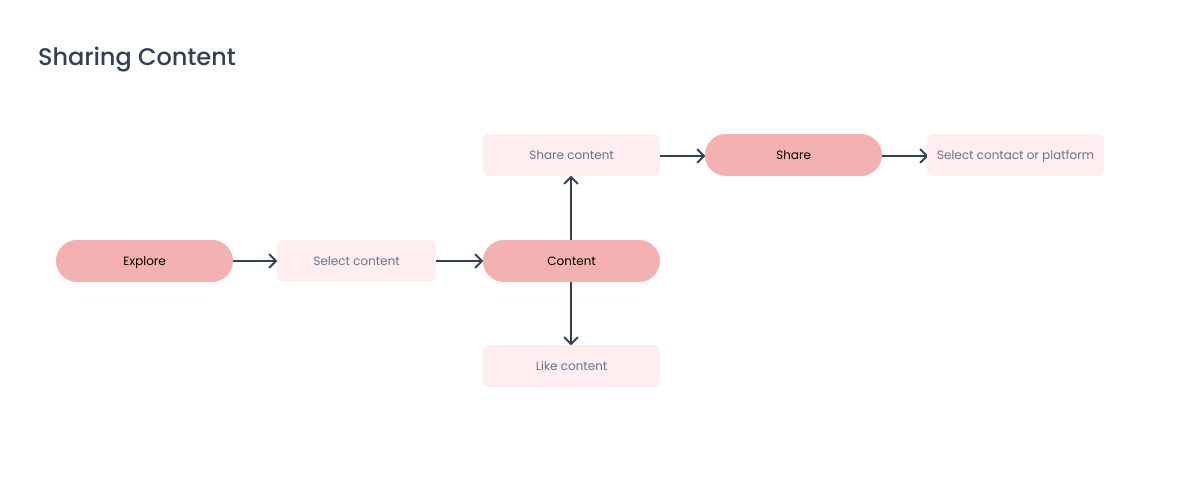
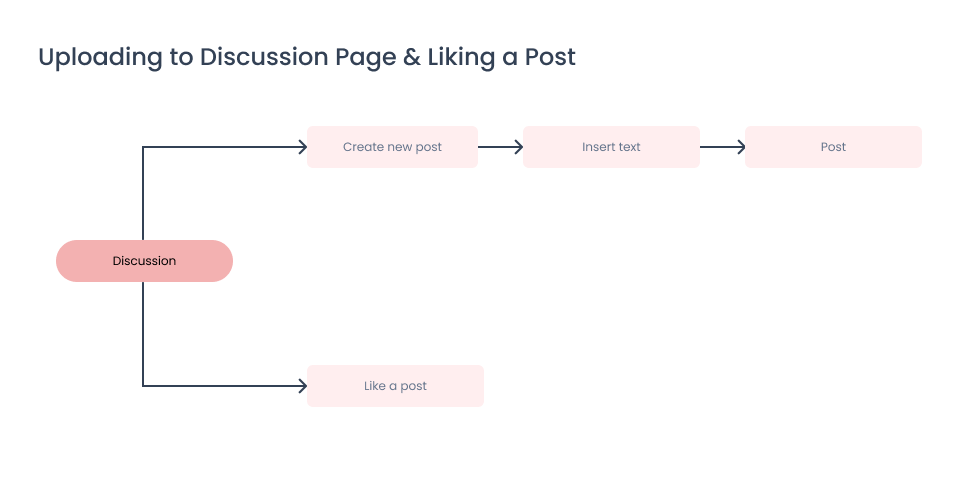
I have created a userflow chart to help visualize what the process of each task would look like for the user from start to finish.


The application has content where users can swipe horizontally to see hidden content and can where it is coming from visually.
.jpg)
Certain widgets like share widgets allow users to swipe down to close it rather than pressing the cancel button. This has been added to cater towards experience users as this interaction has been implemented on other existing platforms such as Twitter, Facebook and etc.
.jpg)
To show responsive feedback, an animation will play when users like a post.

Once the research and sketching phase was over, we were tasked with developing branding and the prototype. During the time of this project, I had originally designed the app using Axure, a prototyping tool supported by Swinburne. Given this software is very outdated, I redesigned the app using Figma to obtain better results.
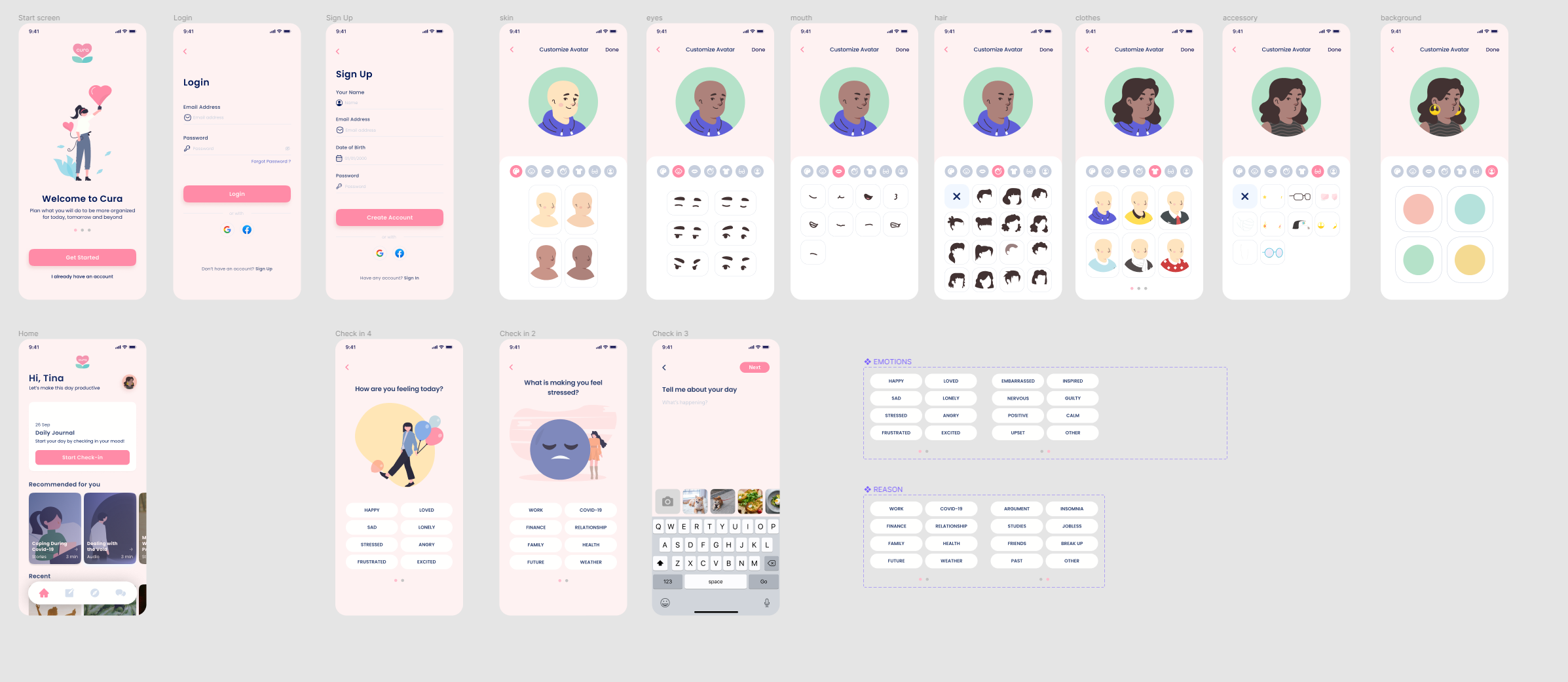
I was able to gather four participants to test my interaction prototype and based on the feedback, the testing was a success and I recieved overwhelmingly positive feedback but there were some minor aspects that needed to be changed such as font size being too small.
.gif)
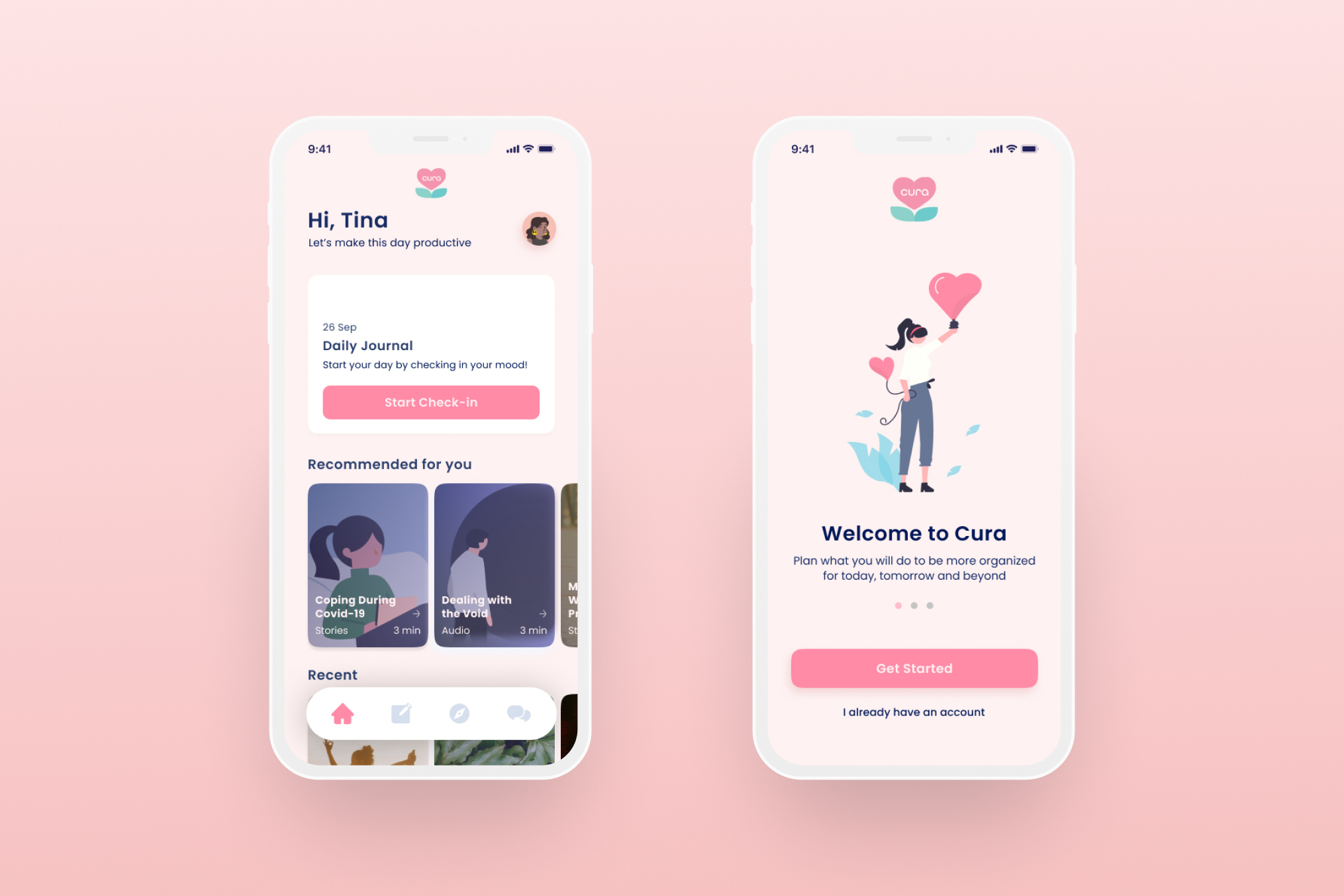
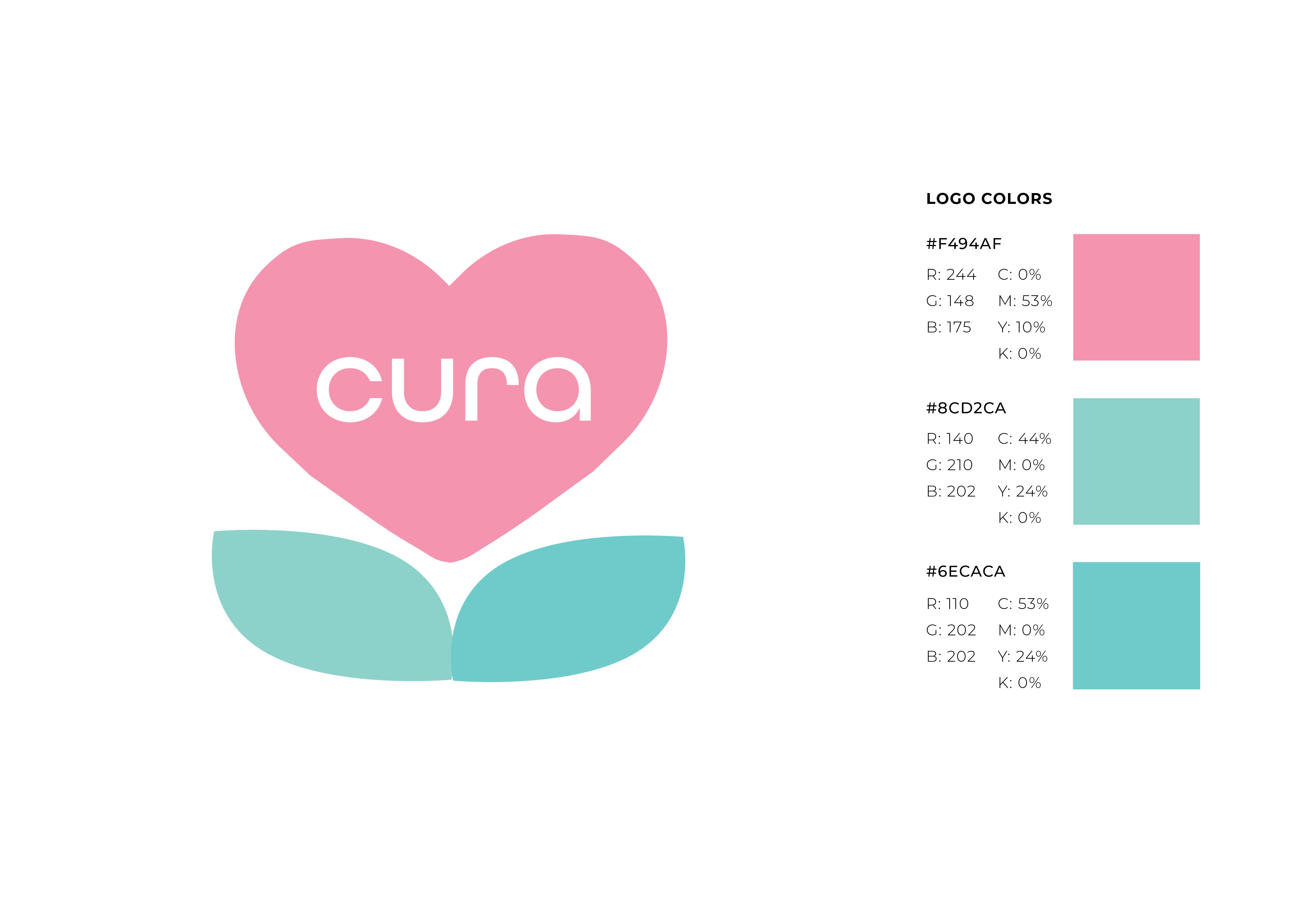
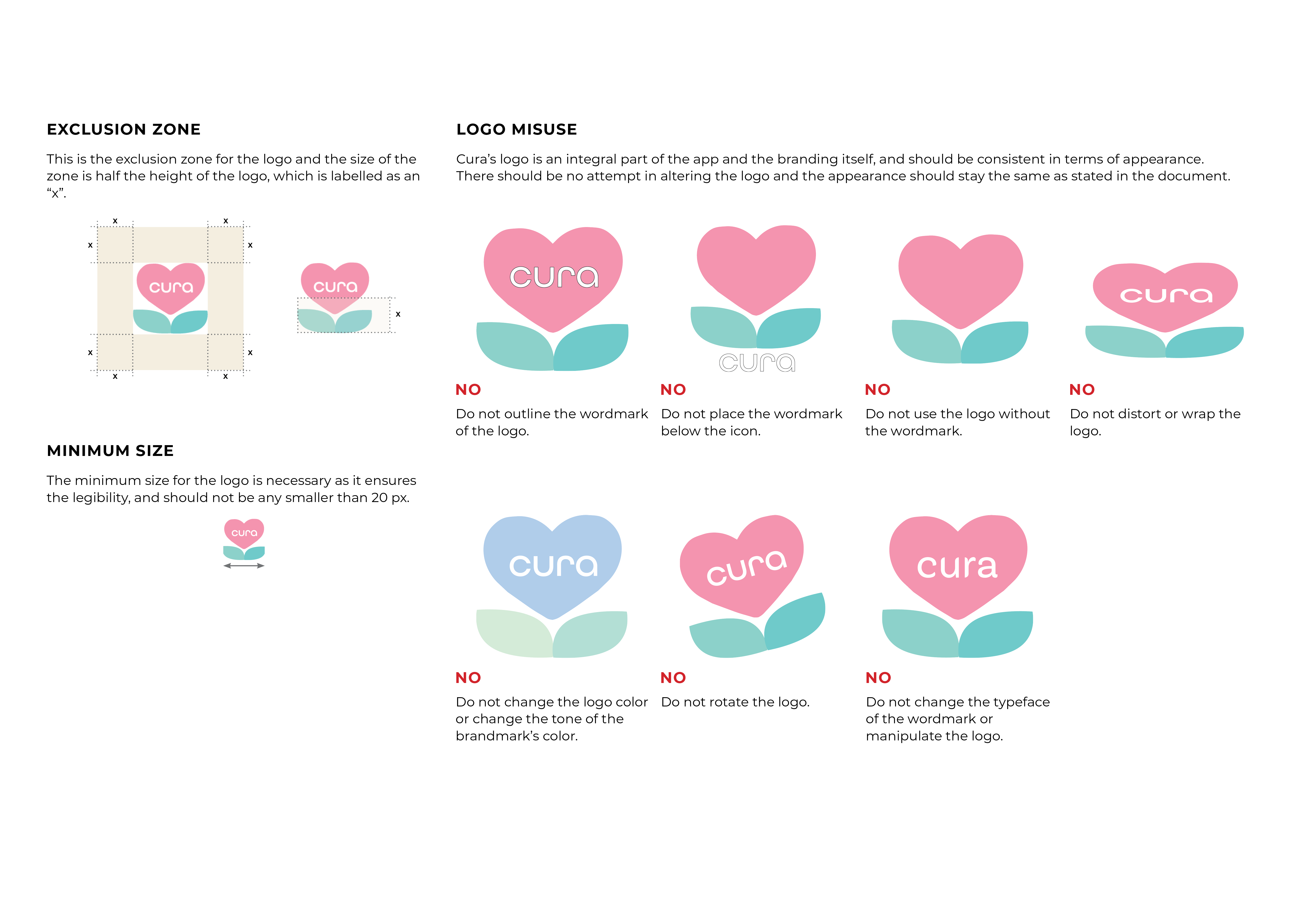
For the branding, I wanted to incorporate a heart motif in the logo because I felt that this best represented the idea of self-care. The idea of using the heart as a flower symbolizes healing and nurturing one’s well-being in a physical and mental sense.
Take the time to love yourself. Cura is a self-care app that allows women to practice self-care on the go and encourage them to develop healthy habits. In addition, the app acts as a connection hub for those who want to share how they’re feeling to others, or to meet people who share the same concerns.
Interactive prototype is available down below.
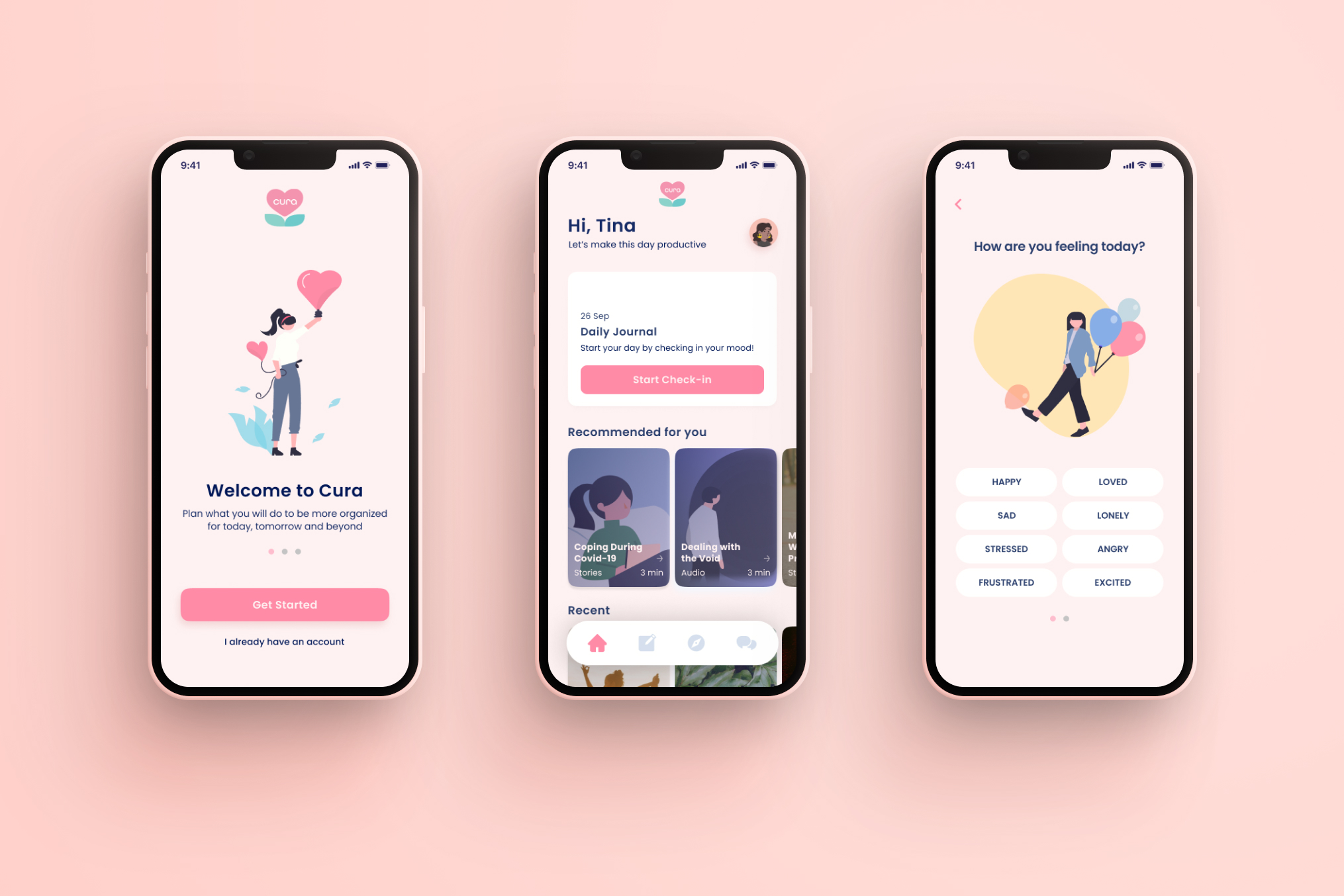
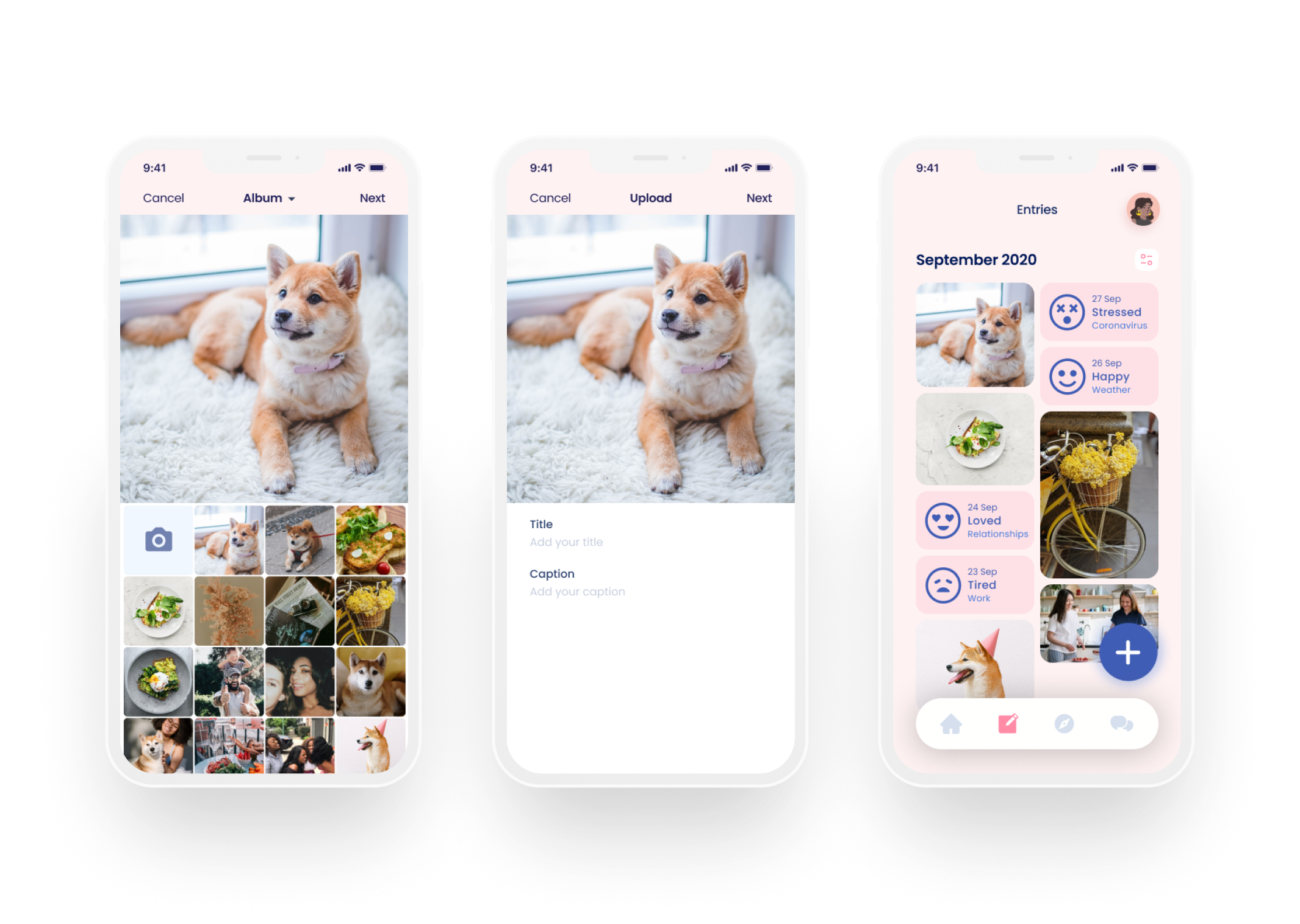
In a carthartic exercise of self-reflection, users are able to document how they’re feeling and can elaborate further once selecting one of the options available in the app.
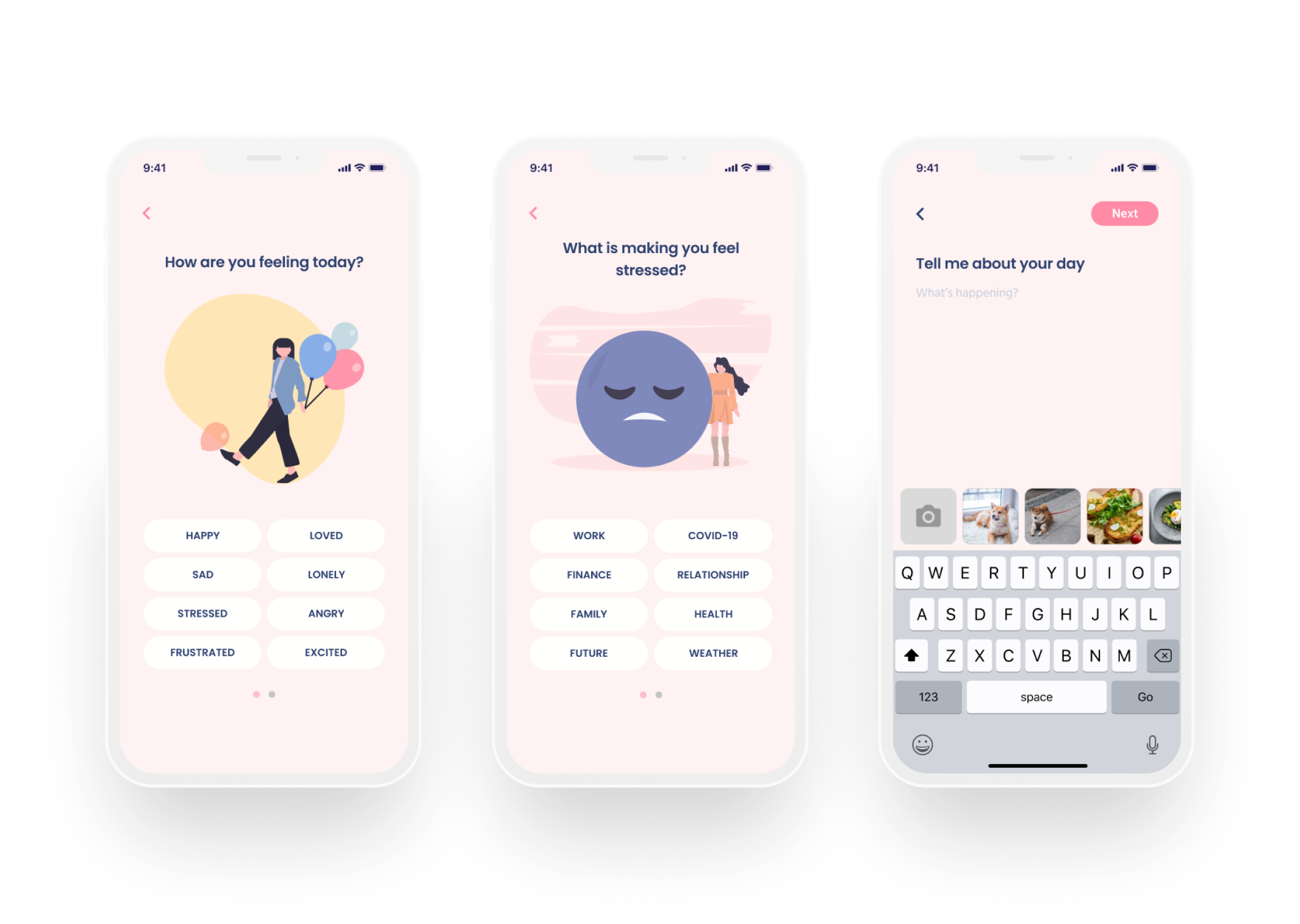
Uploading a photo to your journal gives it a more personalized feel.
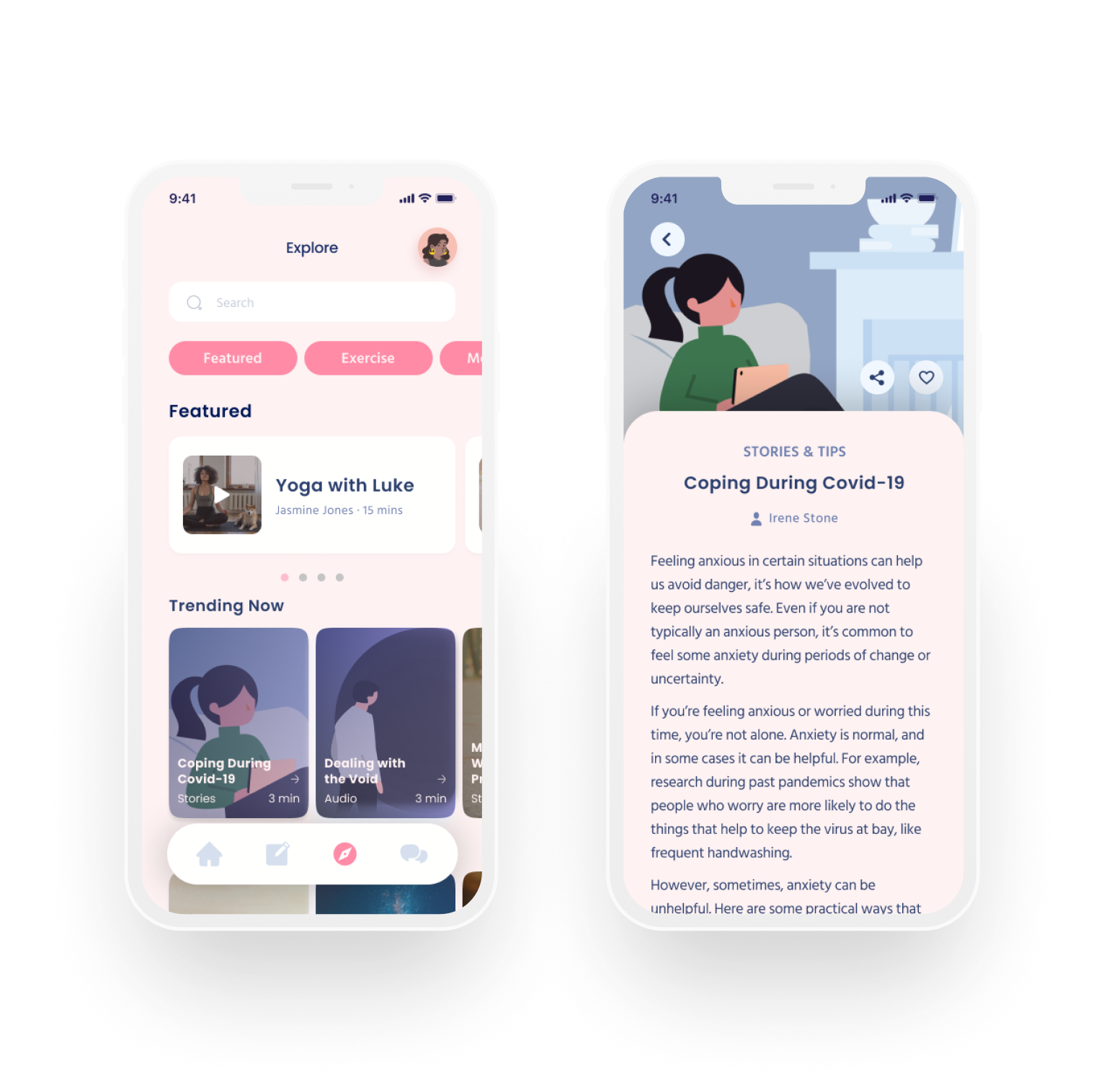
Resources on self-care techniques are available in the explore tab and are published by helath professionals.
Users are also able to like and share these posts with their friends or family.
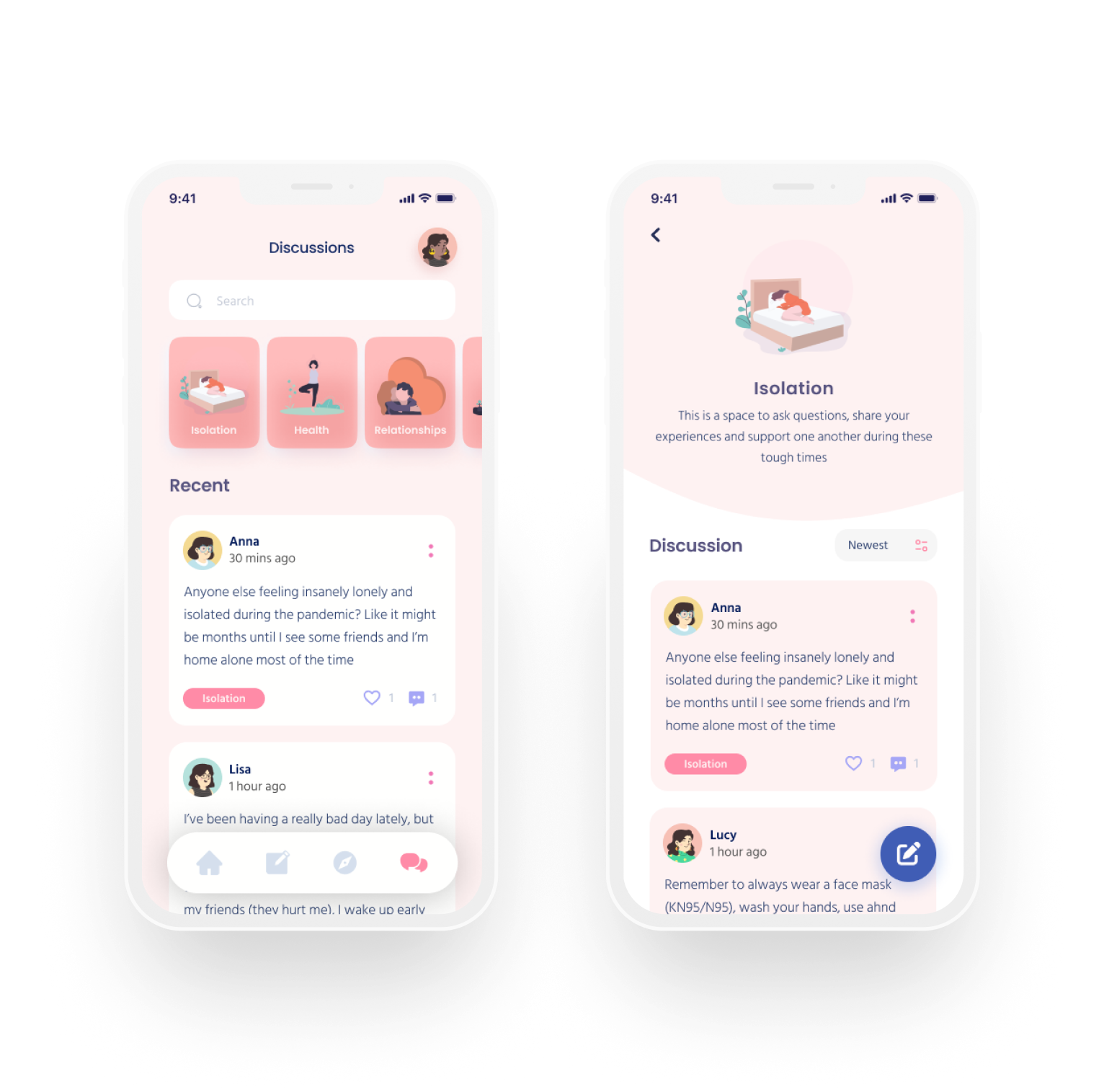
A forum where users are able to share resources or their thoughts with other users and are able to connect with them by using the like and comment function.
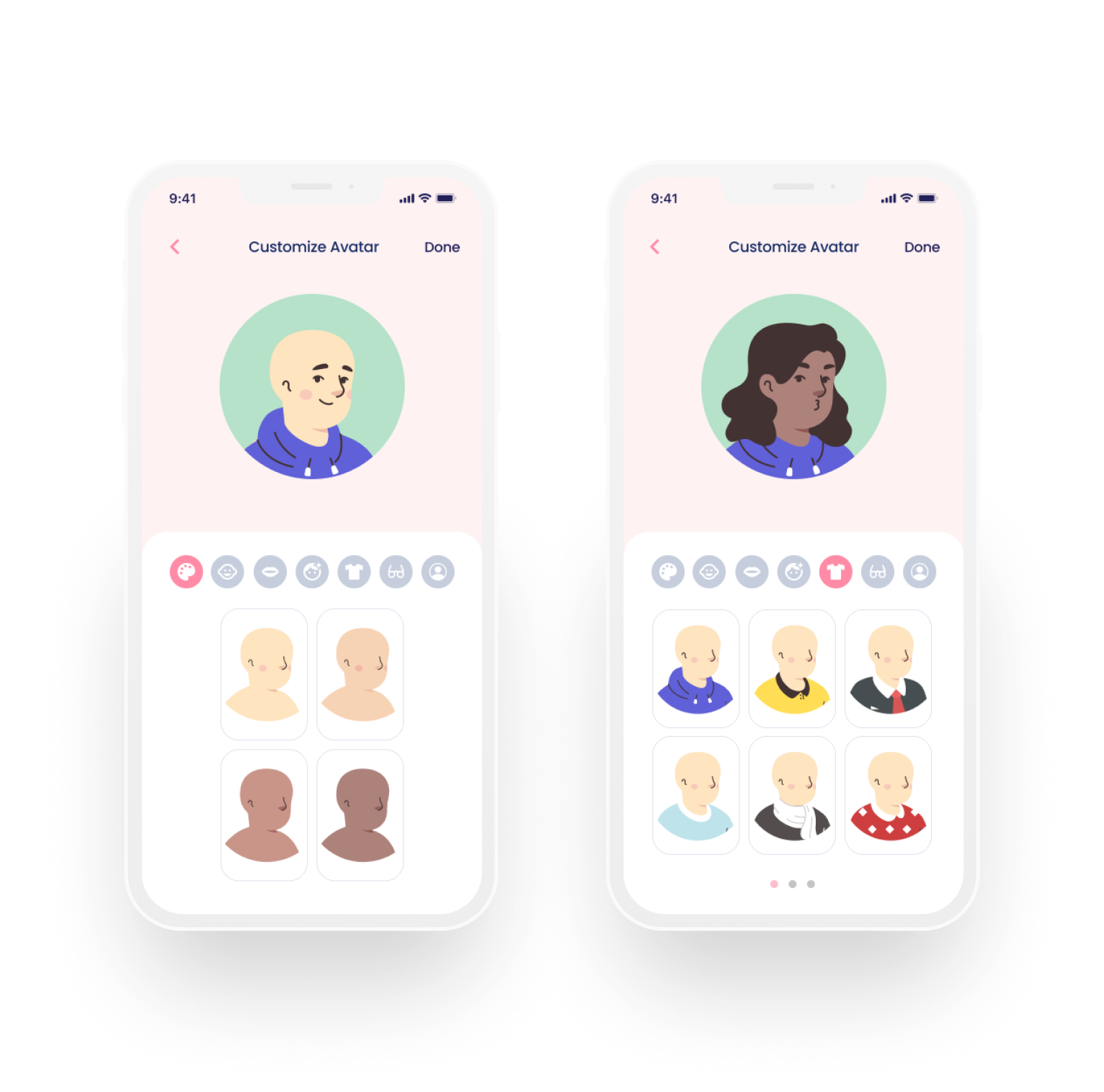
Users are able to customize their avatars however they please. This encourages users to express themselves and cultivate a sense of identity.


© 2022 Tulip Vy.